


Introduction
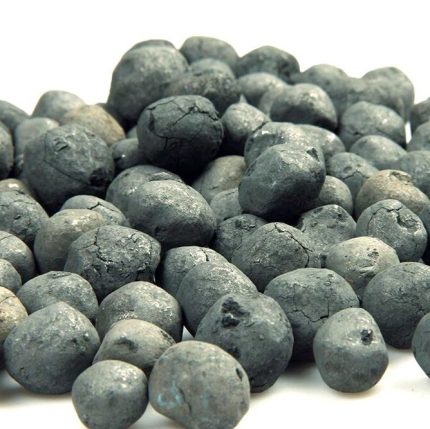
Iron ores are rocks and minerals from which metallic iron can be economically extracted. The ores are usually rich in iron oxides and vary in color from dark grey, bright yellow, or deep purple to rusty red. The iron is usually found in the form of magnetite (Fe3O4, 72.4% Fe), hematite (Fe2O3, 69.9% Fe), goethite (FeO(OH), 62.9% Fe), limonite (FeO(OH)·n (H2O), 55% Fe), or siderite (FeCO3, 48.2% Fe).
Ores containing very high quantities of hematite or magnetite (typically greater than about 60% iron) are known as natural ore or direct shipping ore and can be fed directly into iron-making blast furnaces. Iron ore is the raw material used to make pig iron, which is one of the main raw materials to make steel — 98% of the mined iron ore is used to make steel. In 2011 the Financial Times quoted Christopher LaFemina, mining analyst at Barclays Capital, saying that iron ore is “more integral to the global economy than any other commodity, except perhaps oil”.
Shipping and Logistic
The majority of incidents where bulk carriers have been lost were when carrying iron ore. In the carriage of iron ore, the following precautions should be taken:
-
- trimming of these cargoes is generally required (even though their angle of repose is mostly above 35°) to spread their weight across the entire tank top
- the stability of vessels  as iron ore is a high-density cargo, when loaded on an ordinary bulk carrier (not an ore carrier) it will increase the vessel’s GM to make it a `stiff’ ship.
- dust  iron ore is commonly loaded with conveyor belts, grabs, chutes and bucket belt unloaders, causing significant quantities of dust during both loading and discharging. However, enclosed conveyor belt systems generate less dust. The dust may damage ship’s machinery as well as the health of personnel.
- moisture content  iron ore is assumed to have a homogeneous moisture content between 0Â16%. However, if kept lying in the open, the moisture content may increase due to absorption from air or rain. If the exact moisture content is unknown, a proper laboratory test may be called for. The Master must also ask the shipper to detail the cargo’s moisture content and TML
- In recent years an increase incident attributed to carrying iron ore filings with excessive moisture content, causing sloshing and adverse stability and in some cases the rapid loss of the ship. During the monsoon season in the Indian sub-continent iron ore filings are stored and transported open to the elements. It is worth remembering that the cargo may remain stockpiled before being shipped later in the dry season
- Iron ores are heavy cargoes which occupy a small area for a large weight, ie they have a low stowage factor (between 0.24Â0.80 m3/tonne). It is therefore important that the tanktop has sufficient strength to carry certain iron ores. If a bulk carrier loads a homogeneous cargo of, say, iron ore, the amount of cargo permitted to be loaded in the hold would be determined by multiplying the surface area of the tank top by the permissible load per m2. The loading given by this calculation should never be exceeded.
- It is imperative that the cargo moisture content is tested prior to and monitored during all stages of loading as, once onboard, cargo may be extremely difficult to remove.
The shipper’s test certificate should be presented before loading, be sound and no more than seven days old. A good indicator during the load is the presence of splatter marks of iron ore filings on the bulkheads. If splatter marks are evident, they should be taken very seriously as an indication that the moisture content is above the TML and the flow moisture point. If the Master is in any doubt, he should contact the owners and the P&I Club correspondent. - stress monitoring  stresses upon the ship, both in port and at sea, should be monitored using an HSMS (Hull Stress Monitoring System) if fitted, and the movement of cargo and ballast monitored using stress calculating software
- alternate hold loading  bulk carriers sometimes carried iron ore in alternate holds at the request of charterers owing to the economic advantages of faster turnround and raised center of gravity. To do so ships must be specially strengthened. SOLAS Chapter XII bans alternate hold loading for single skin ships of 150 m or more in length, built before 1st July 1999, that carry cargo equal to 90% of the ship’s deadweight.
- the iron ore standard sampling procedure given in the IMSBC Code should be followed.
Specification
Fe2 03Â Â Â Â Â 63.5
SiO2Â Â Â Â Â Â Â 21.45
Al203Â Â Â Â Â Â 4.16
Ca OÂ Â Â Â Â Â Â 2.31
Mg OÂ Â Â Â Â Â 1.54
Na20Â Â Â Â Â Â Â 0.56
K20Â Â Â Â Â Â Â Â 0.42
SO3Â Â Â Â Â Â Â Â 0.06
L.O.IÂ Â Â Â Â Â Â 2.69
TiO2Â Â Â Â Â Â Â 1.57
P205Â Â Â Â Â Â Â 1.85






Reviews
There are no reviews yet.